Art of Kash / The Art of Kashmir
The Art of Kashmir
Kashmir's living craft heritage
Kashmir has been a centre of fine craftsmanship for centuries, its artisans passing down techniques from one generation to the next largely unchanged by time. Long before "Pashmina" became a word known around the world, Kashmiri hands were spinning fleece into yarn, weaving it on wooden looms, and embroidering it by candlelight with motifs drawn from the valley's own gardens and mountains.
This craftsmanship isn't limited to textiles. Walk through the old city of Srinagar and you'll find workshops for hand-carved walnut wood, hammered and engraved copperware, papier-mâché, and khatamband — the intricate geometric wood inlay work seen on ceiling panels and furniture. Each craft has its own guild, its own vocabulary, and its own family lineages of ustads (master craftsmen) who train the next generation.
At Art of Kash, we work directly with these artisans in Srinagar. The photographs below are from their workshops — real work in progress, not staged studio shots — because we want you to see exactly where and how your shawl or stole was made.
How a Kashmiri shawl is made
Every Art of Kash piece passes through several distinct crafts before it's ready to wear, and each one is still done almost entirely by hand. Raw Pashmina fibre is washed and spun into fine yarn, wound onto bobbins, and set up thread by thread on a wooden handloom. What comes off the loom is plain fabric — it's the weeks of dyeing, printing, and embroidery afterward that give each shawl its character.
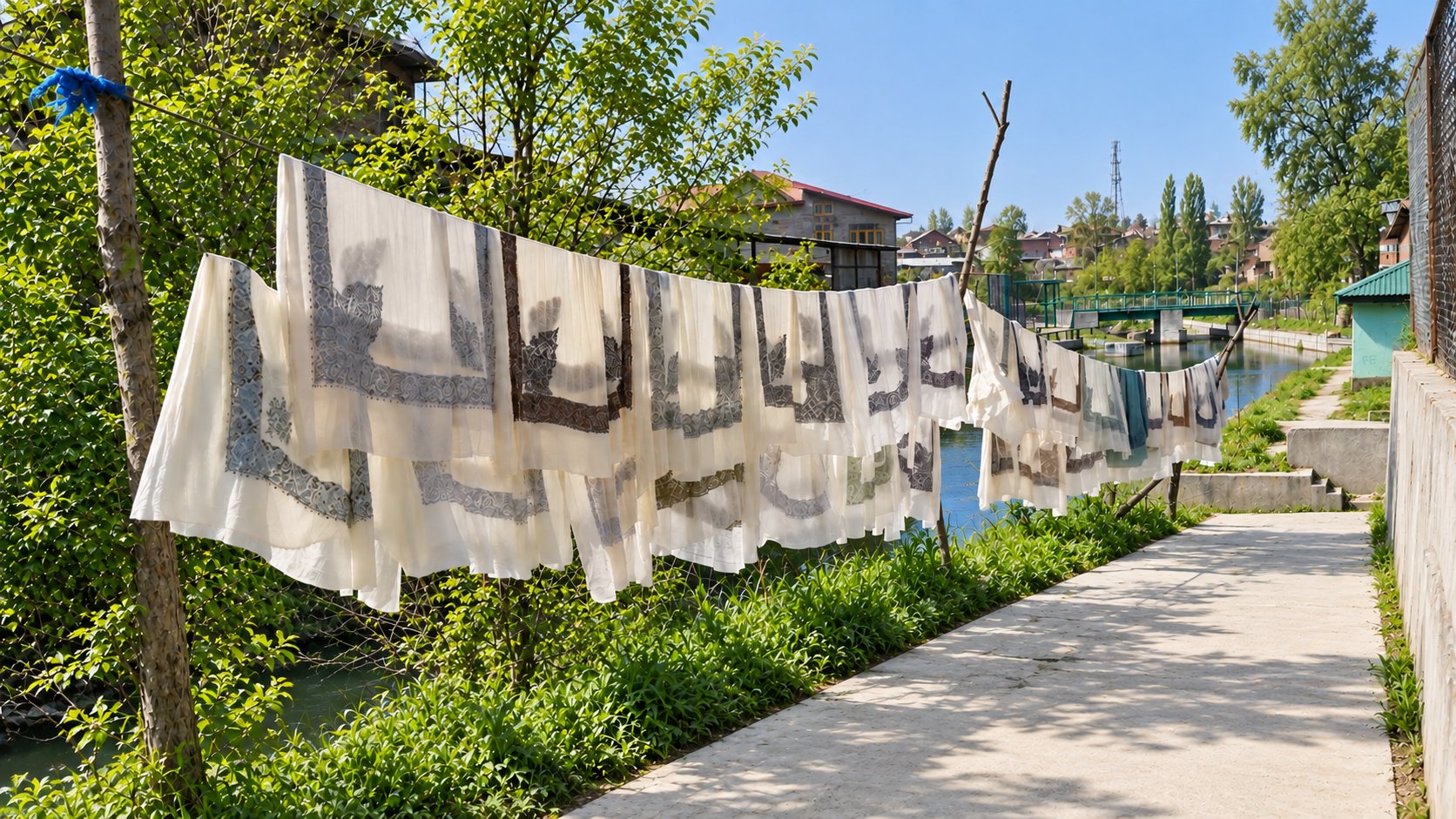
Colour is added by hand: lengths of woven fabric are dipped and rinsed repeatedly in small dye baths until the shade is even, then hung to dry in courtyards and along the riverside. Before embroidery begins, a hand-carved wooden block is often used to stamp the guiding outline of the design onto the cloth — the pattern the embroiderer then fills in, stitch by stitch, entirely by eye.
Yarn & spinning
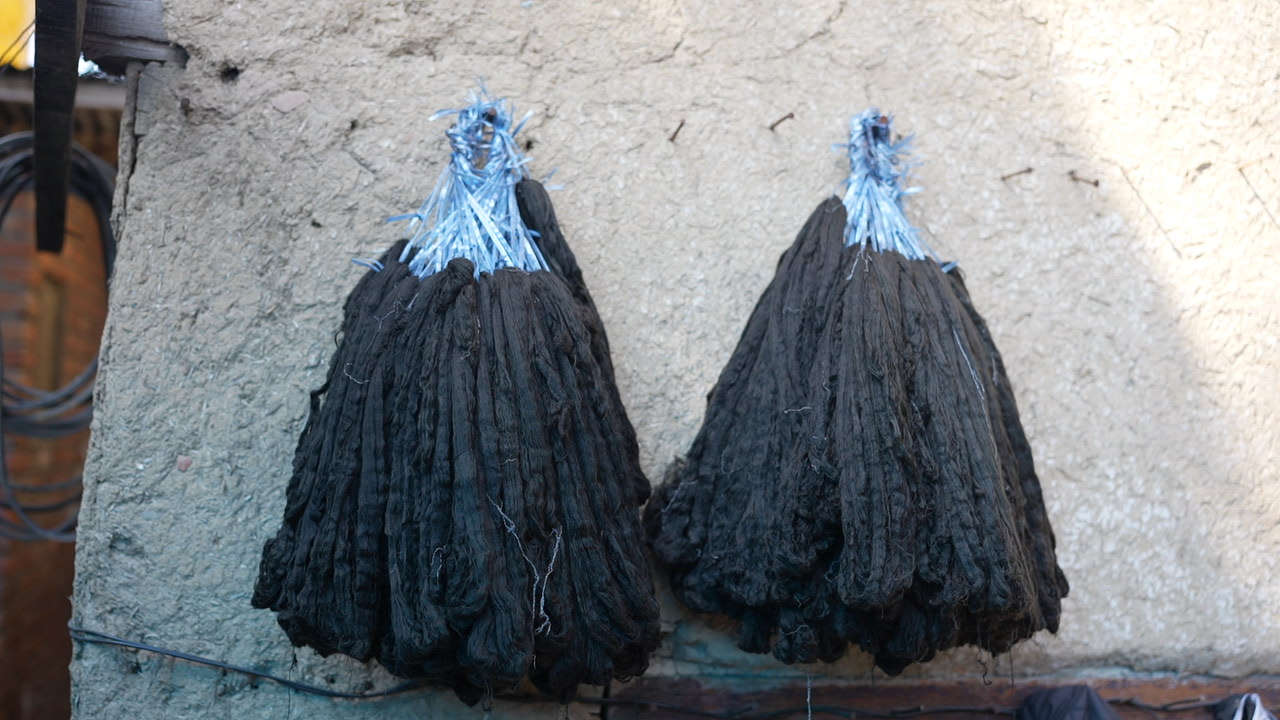
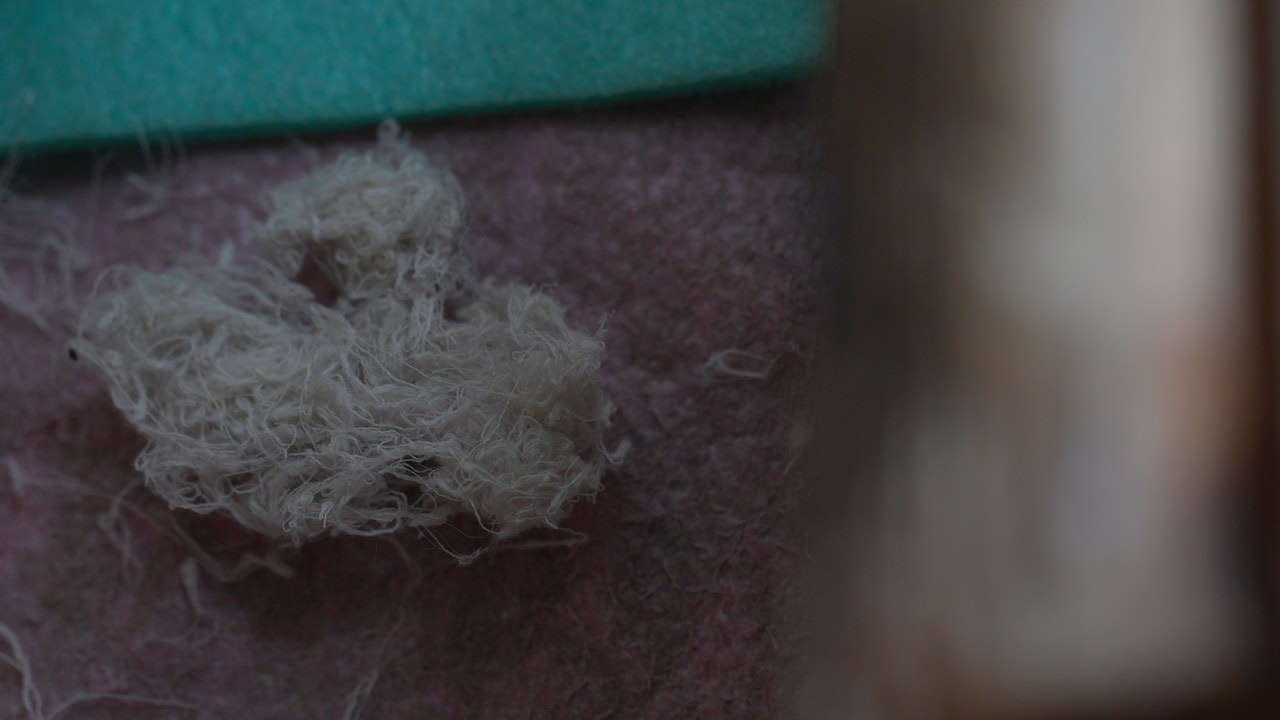
Before it can be woven, raw Pashmina fibre is washed by hand to remove lanolin and dirt, then spun into fine, even yarn and wound onto cones ready for the loom.
Hand-weaving on the loom
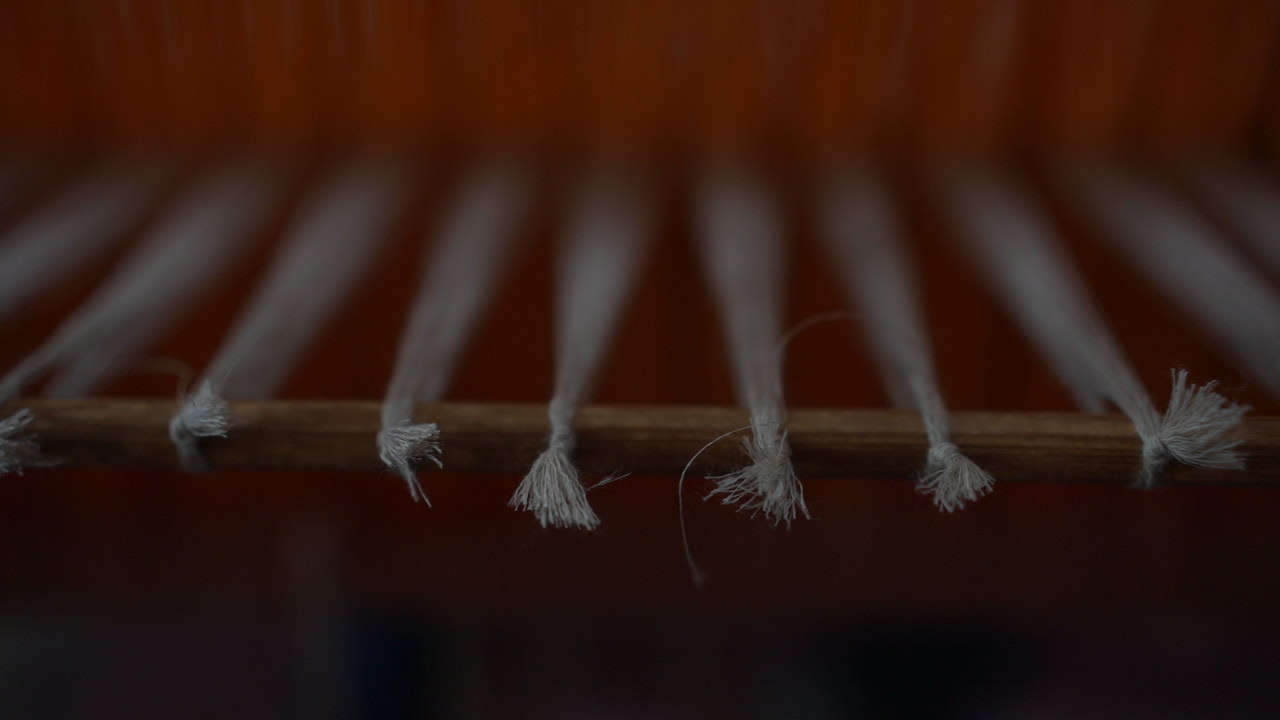
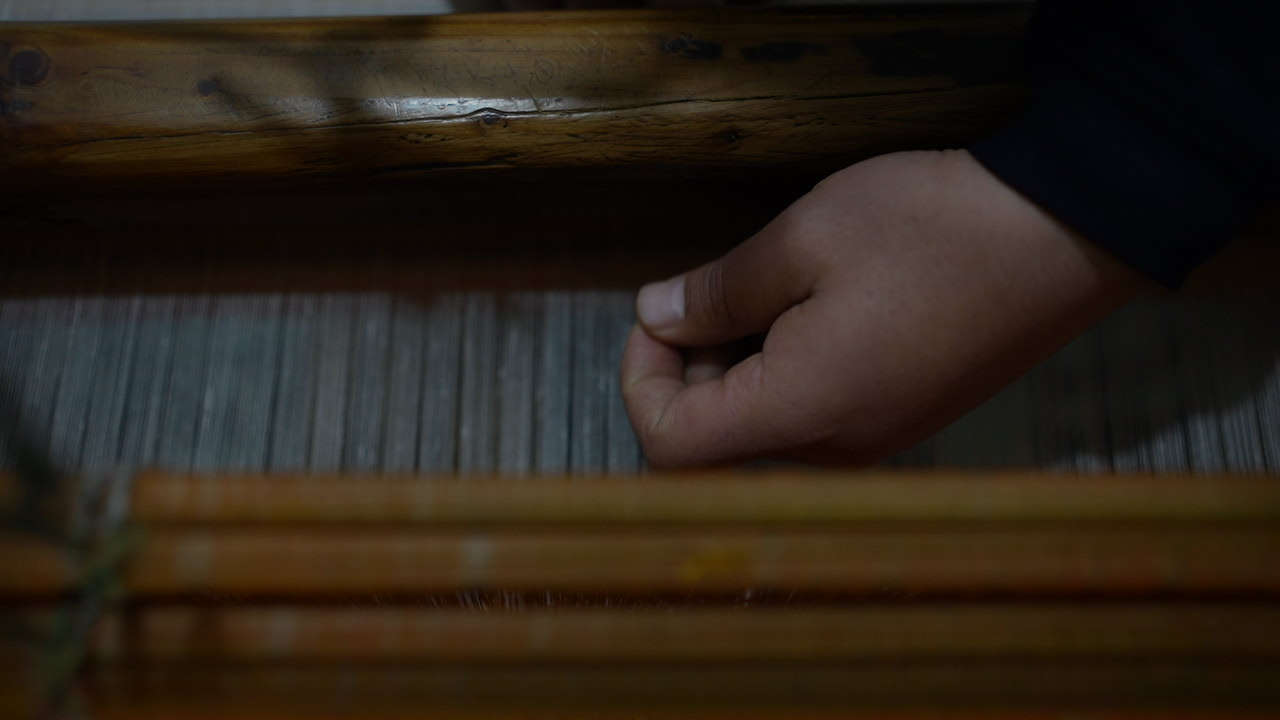
Weavers work the traditional wooden handloom by hand, passing weft thread through hundreds of warp ends one line at a time. Warp threads are strung and knotted onto the loom under tension before weaving even begins — a single stole can take days to finish.
Kani weaving
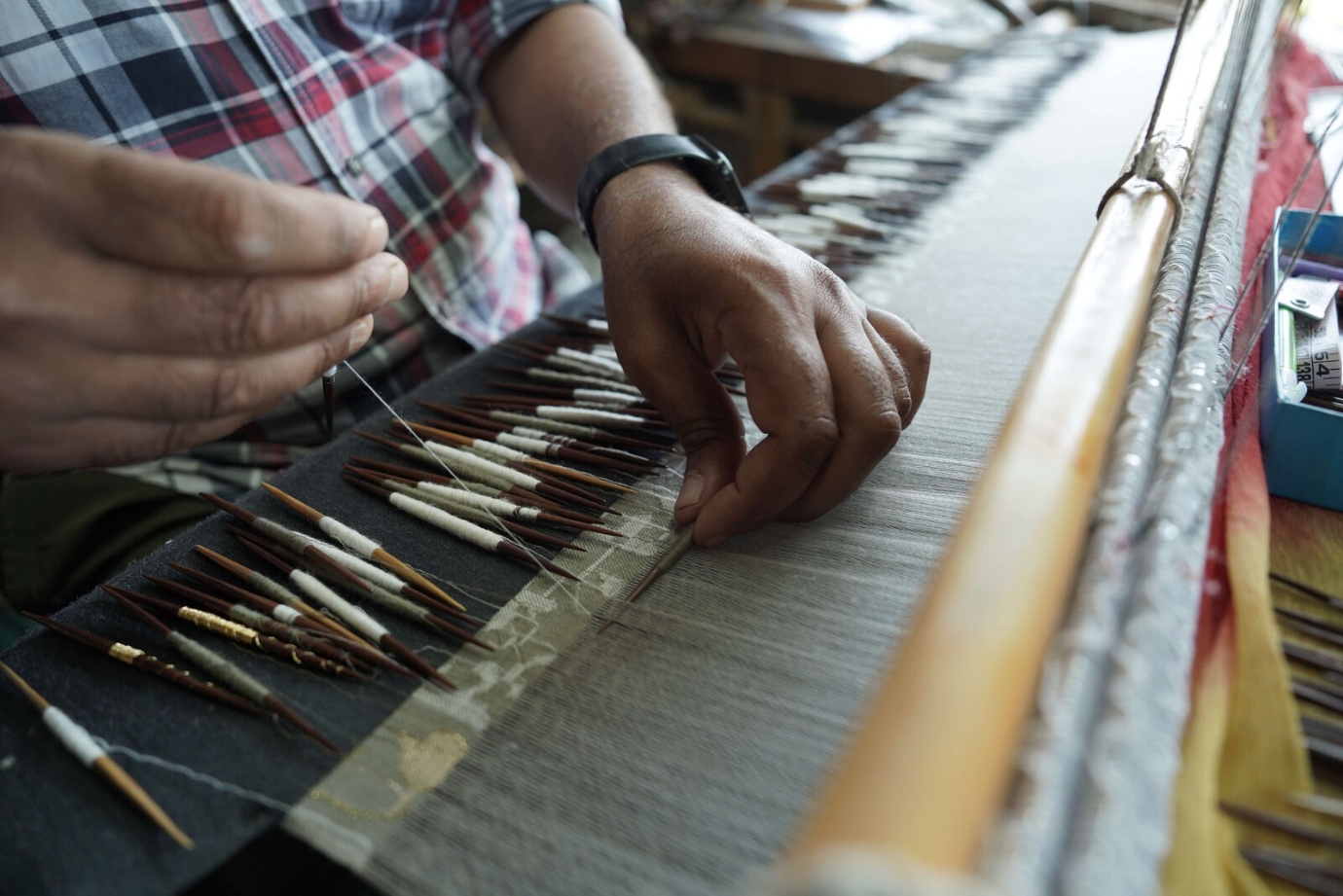
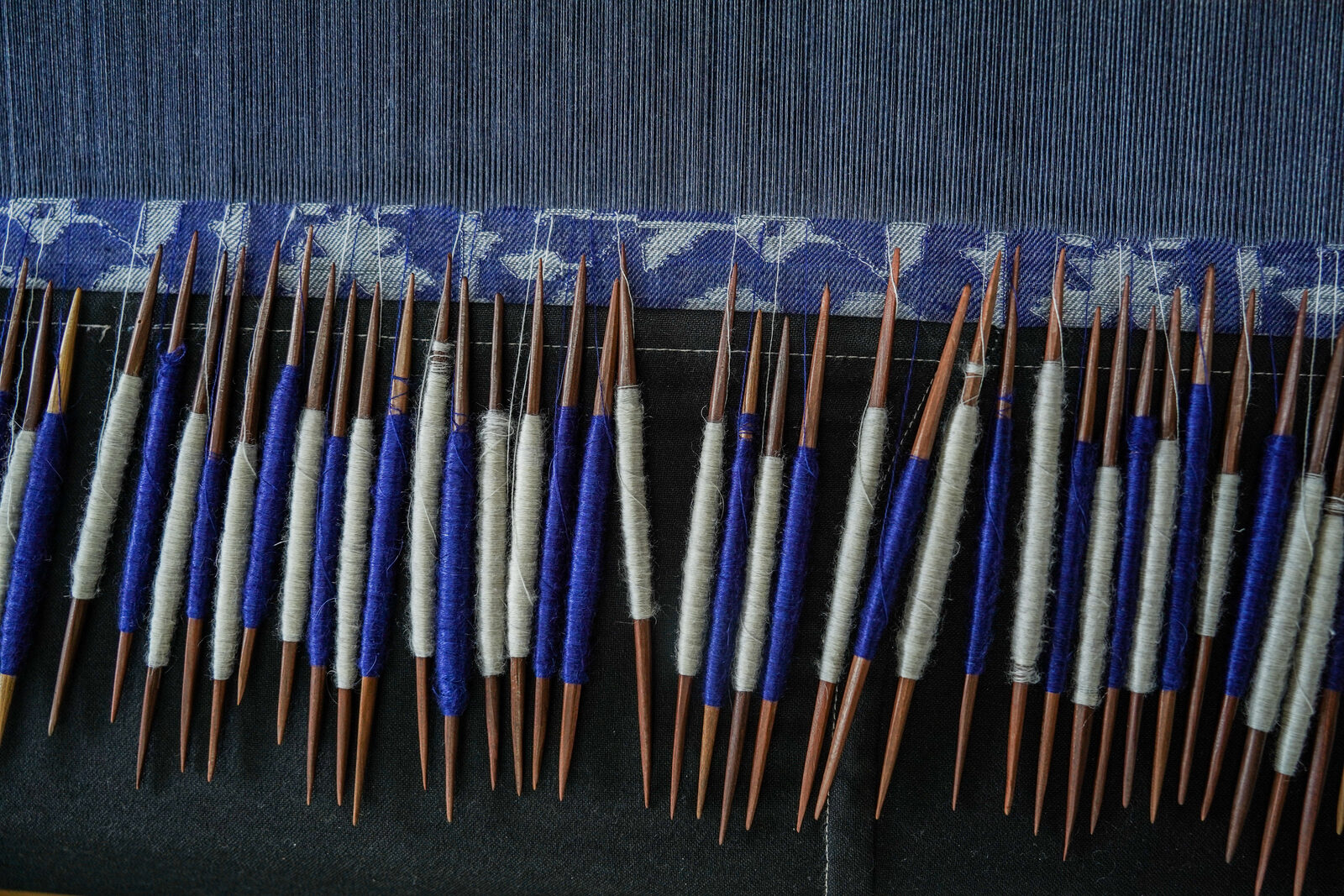
Kani shawls are woven, not embroidered — their intricate patterns are built directly into the fabric using dozens of small wooden spools called Tojis, each wound with a single colour of yarn. A weaver works entirely from memory or a coded pattern chart, picking up the right to for every few threads to slowly build the design.
Finishing
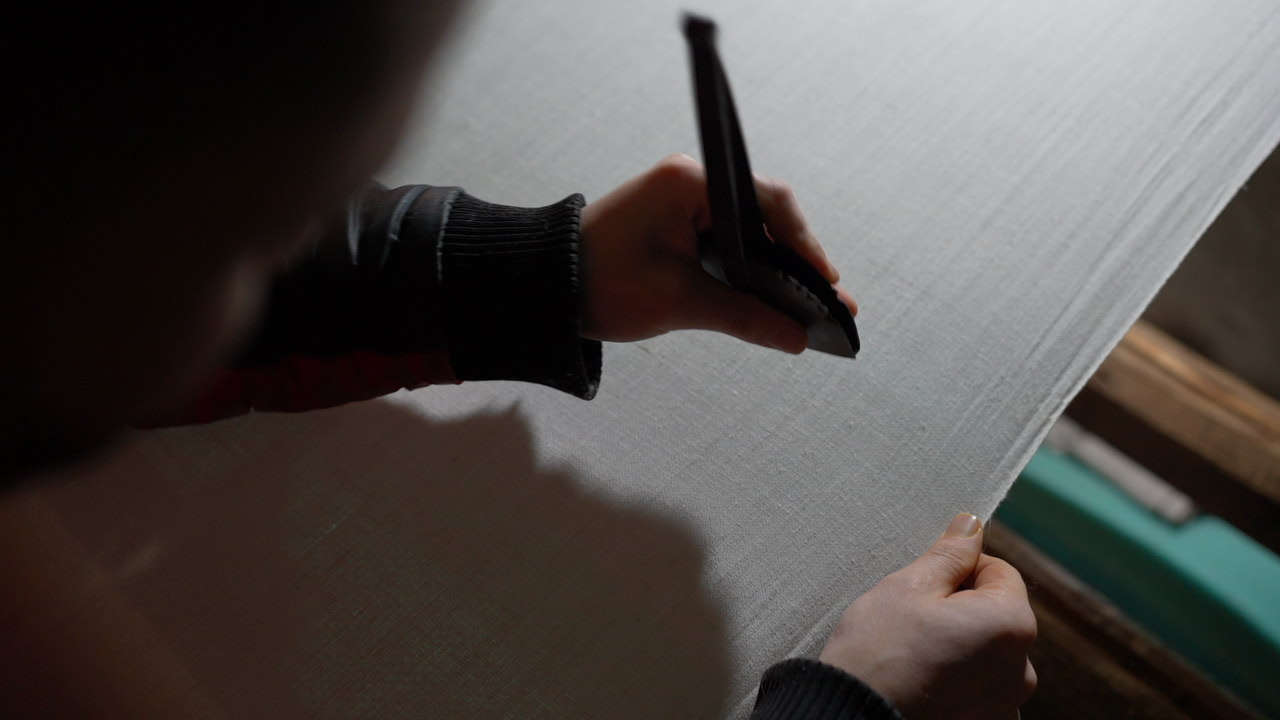
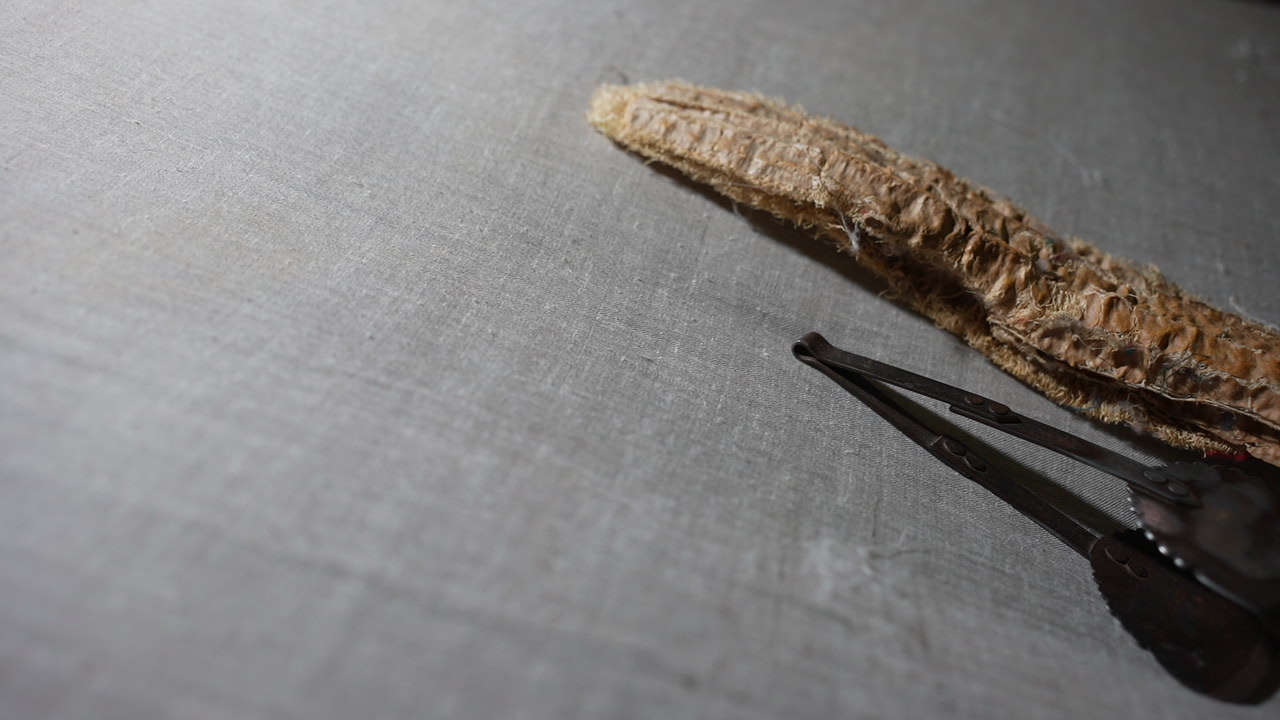
The last hands-on step before a piece is ready: loose threads are trimmed, edges are cleaned up, and fabric is checked over by hand one final time. Then the final product is ready and it then is sent for further processing which is explained below.
Dyeing
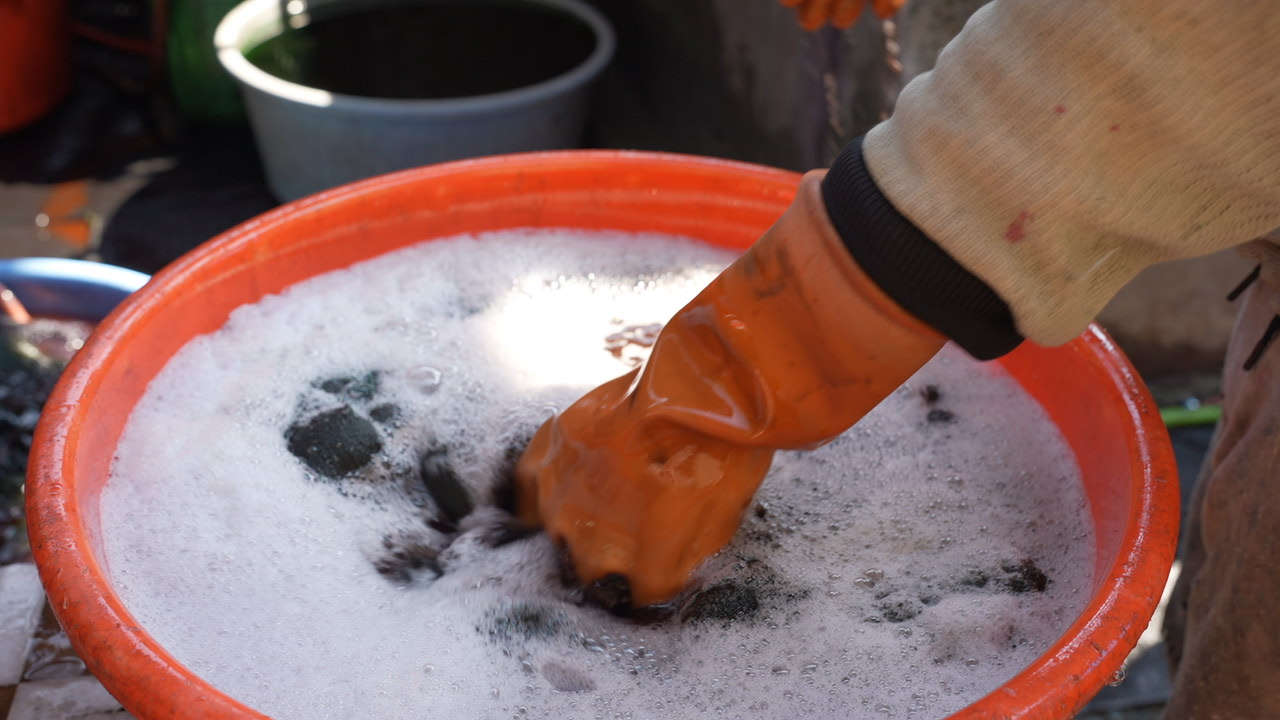
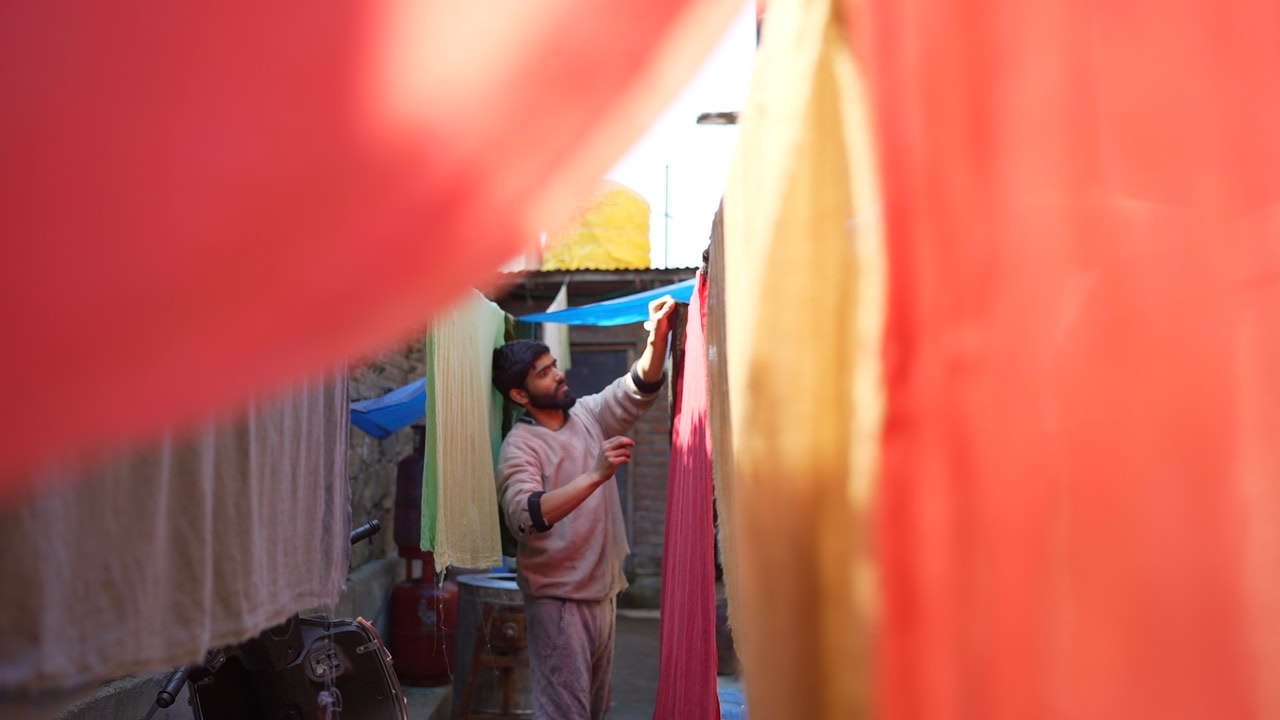
Woven fabric is dyed in small batches rather than machine vats, giving each dyer close control over the final shade. Lengths of cloth are lowered into hot dye baths, lifted and rinsed in clean water, and checked by eye — often repeated several times — before being hung out to dry in courtyards and along the riverside.
Block carving & printing (Naqashi)
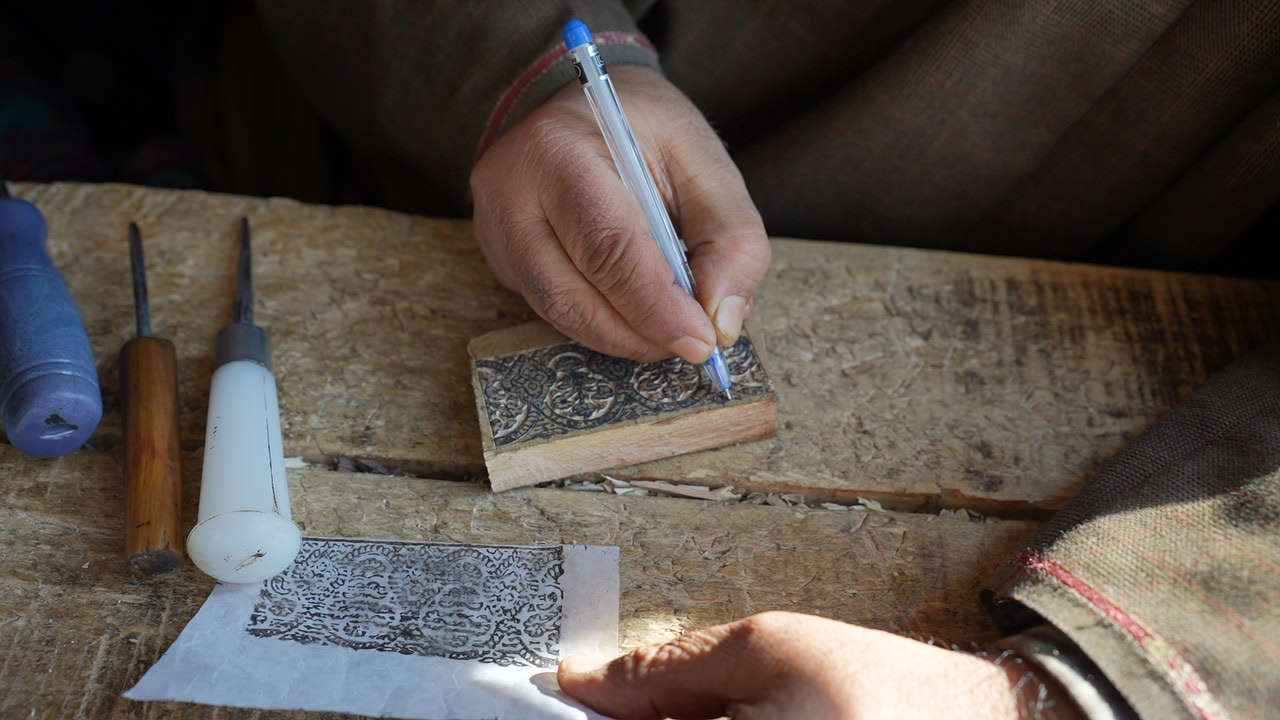
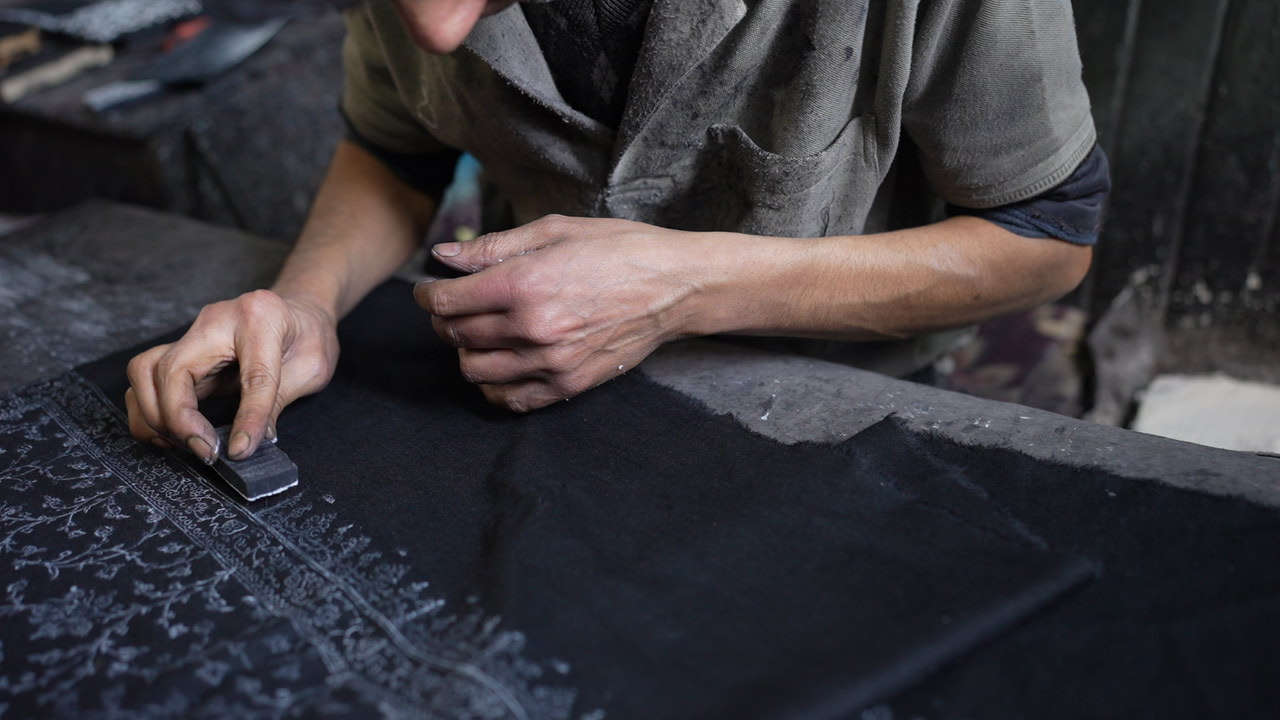
Before an embroiderer picks up a needle, many designs are first outlined onto the fabric using a hand-carved wooden block. The block itself is made in-house — a craftsman sketches the motif, then chisels it into wood by hand — before it's dipped in dye and pressed firmly onto the cloth to leave a guiding outline for the embroidery to follow.
Hand embroidery — Sozni & Aari
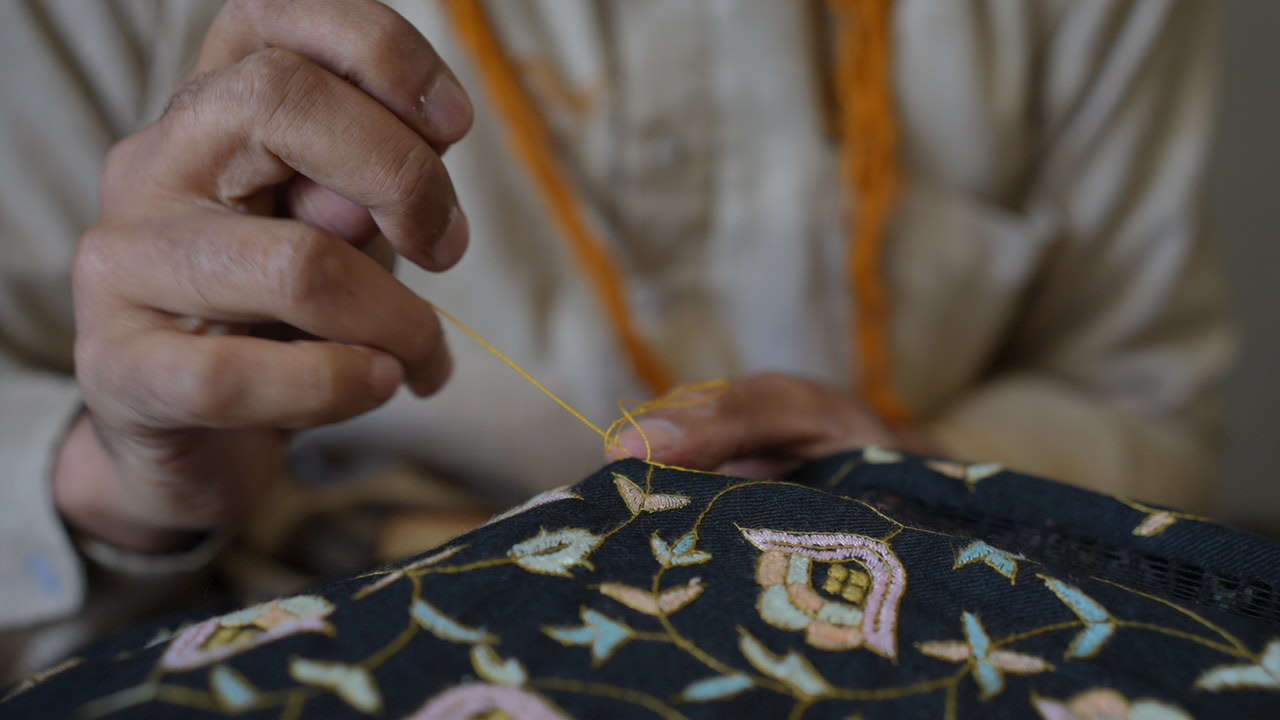
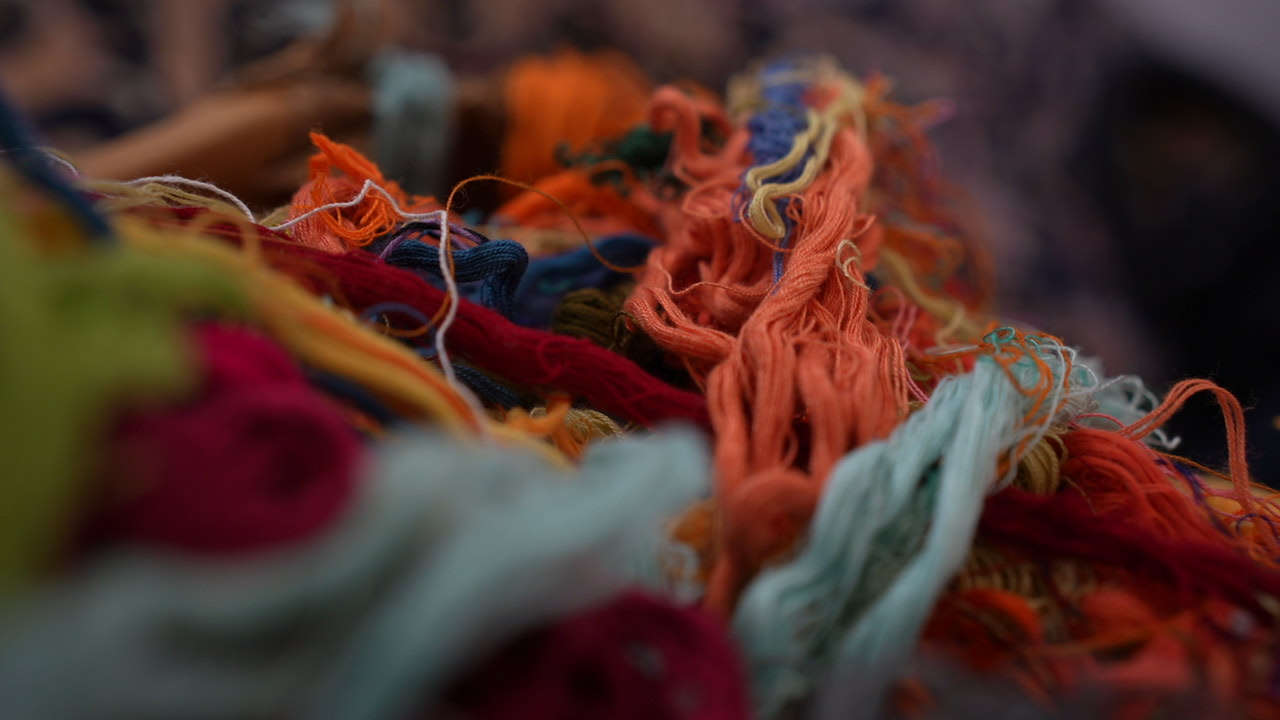
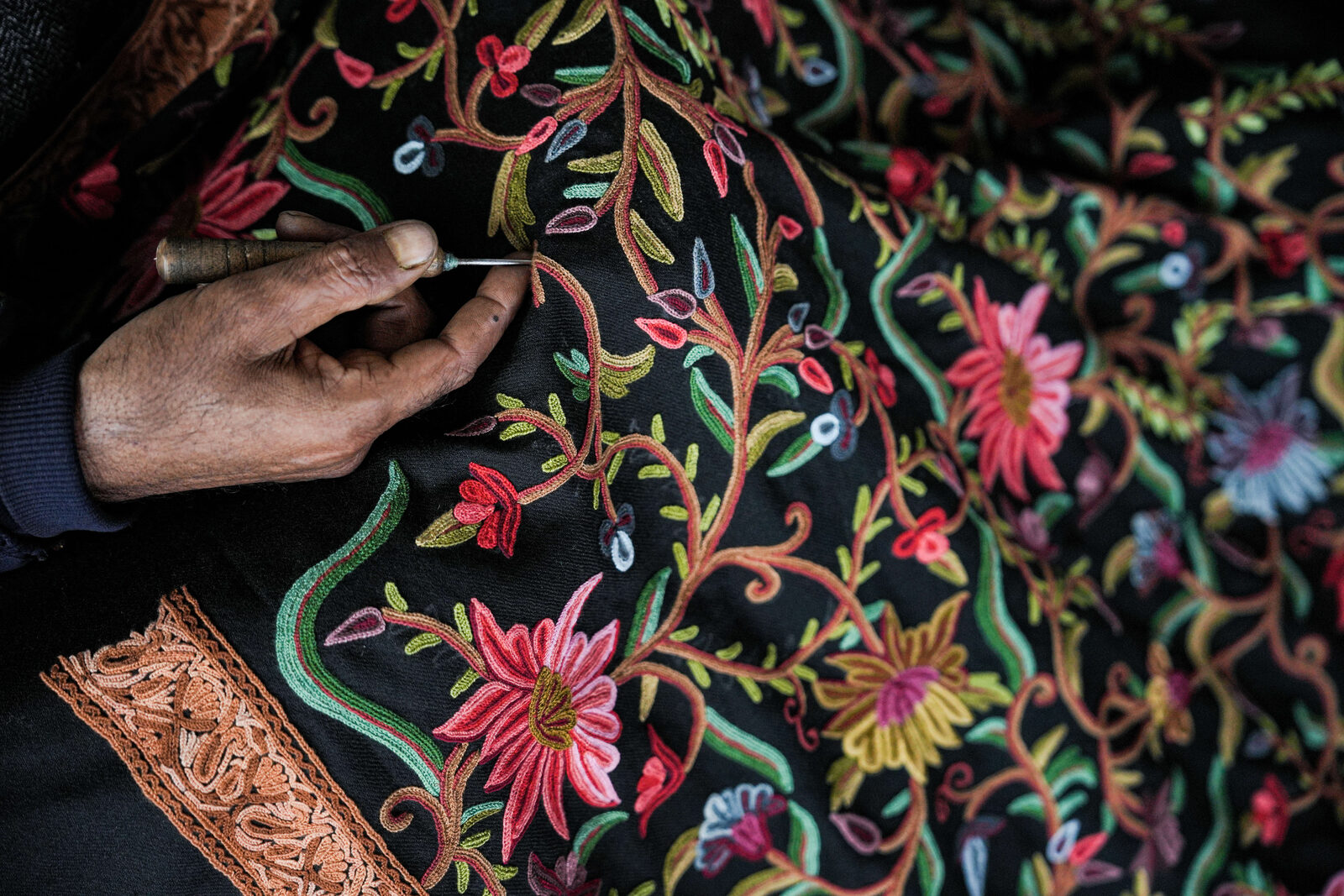
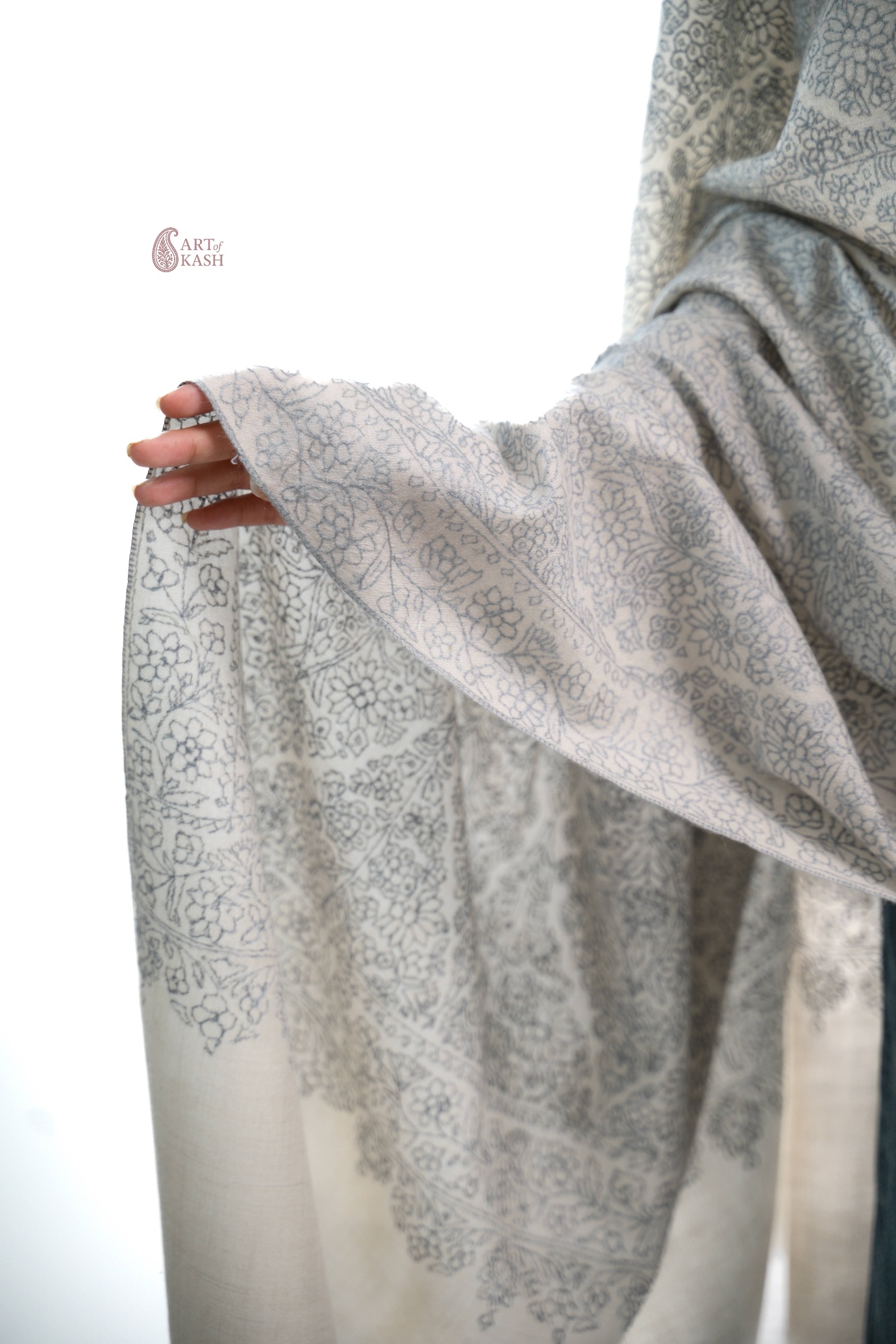
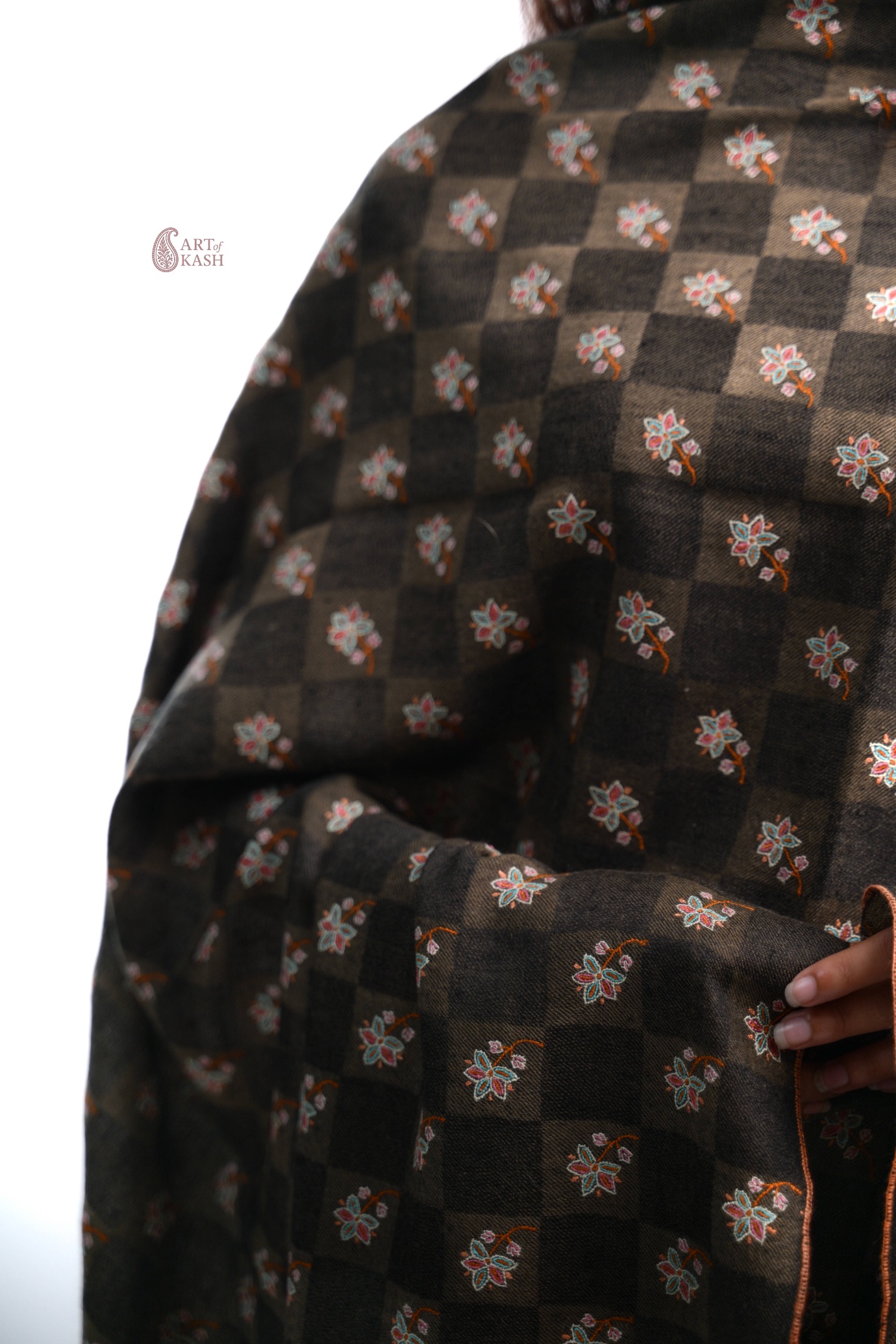
Once dyed and outlined, fabric moves to the embroiderers. Sozni is worked with a fine needle, stitch by stitch from the reverse side of the cloth, often taking weeks to complete a single piece. Aari work uses a small hooked needle to chain-stitch thread onto the surface, allowing bolder, faster coverage — both are done entirely by hand, guided only by the printed outline and the embroiderer's eye.
Sozni is Kashmir's signature needlework — fine, single-strand hand embroidery worked so delicately from the reverse side of the fabric that the design appears almost identical on both faces. Motifs are drawn from nature: paisleys, vines, chinar leaves, and birds like the peacock, each stitched entirely by hand, often taking weeks to months to complete a single piece.